
Chèvre
Beginner–Intermediate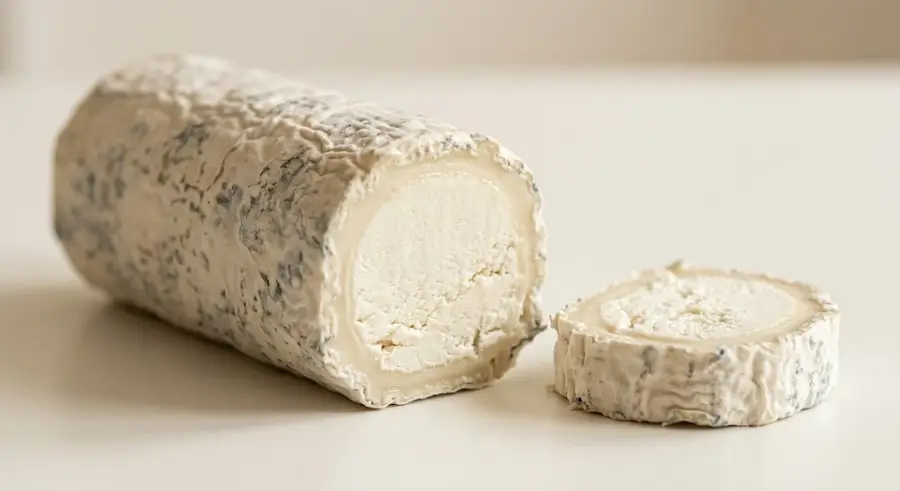
The blanket term for goat's-milk cheese — from snow-white and fresh to fully rinded and aged.
TasteFresh ones lead with a lemony tang and little salt. That tang comes from how it's set — not with rennet but by lactic acid working on the milk for the best part of a day. Aged ones lose the edge and turn nutty and mushroomy, and much deeper, with the goaty note growing more pronounced. Goats kid in spring and the milk follows, so cheese made between spring and early summer is at its most aromatic.
Intensity
TextureFresh, it is moist enough to spread; aged, it firms from the outside in — an old crottin will crumble. The black coating on some isn't decoration: ash lowers the surface acidity so the right molds can take hold, and it was originally ash from burnt grapevines.
Similar cheeses
How it differsChèvre is a category rather than one cheese, so the style matters. Frais is white, fresh and spreadable; a bûche is the log shape, aged at least seven days and rinded; crottin comes as small discs that get firmer and peppery with age. Ricotta is plain and mild beside it, while feta is sheep's milk cured in brine, so salt is feta's defining note rather than tang.
Pairing
🍷 WineSauvignon Blanc
🥂 DrinkSparkling water
🍽️ FoodSalad, roasted beetroot, honey, baguette
How to enjoy
Fresh: spread on bread or crumbled over salad. Aged: sliced thin as is, or warmed briefly and set on a salad. The acidity wants a high-acid white like Sauvignon Blanc, and honey or roasted beetroot balances it out.
What to look for
Decide what it is for first — frais to spread, a log or disc to grill or bake. Good frais is bright white, smooth and springy; yellowing, a slippery surface or any ammonia smell means it is finished. The longer it has aged the stronger it gets, so start at the young end. Dutch goat cheese sits alongside it in many shops: that kind is set with rennet and pressed like gouda, so it is semi-hard, barely tangy and meant for slicing — check which style you have if you were planning to spread it.
Storage
Keep sealed in the fridge, on its own — the aroma travels. Eat fresh chèvre within a week of opening; aged pieces keep longer wrapped in parchment, and go on ripening and deepening while they sit.
⏳ AgingNone to several months
Good to know
Chèvre is simply the French word for goat, so it names a whole family rather than one cheese. The log sold as plain 'chèvre' is usually the unaged kind (chèvre frais). The ones with their own names are chèvre too — ash-coated Sainte-Maure de Touraine, Crottin de Chavignol that hardens with age, pyramid-shaped Valençay. Crottin even has an official name for each stage of ripening, so a ten-day one and a two-month one can be bought as if they were different cheeses.