
Cream cheese
Beginner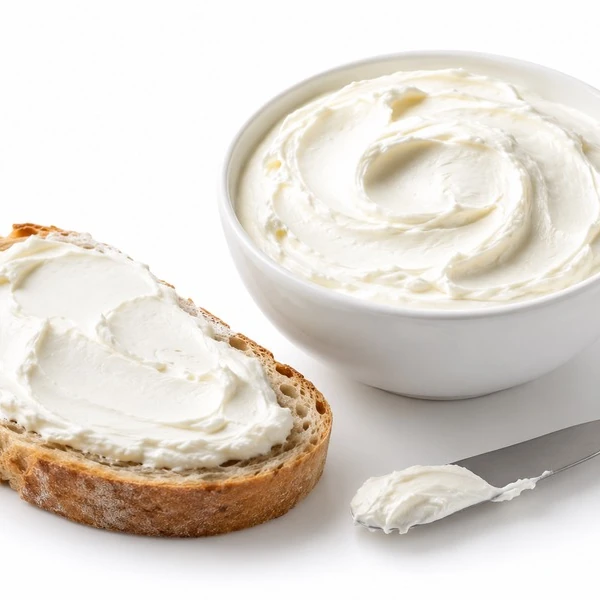
The one you spread on a bagel — mild, with a light tang.
TasteVery mild: milk sweetness with a yoghurt-like tang laid gently over it. That tang comes from culturing with lactic bacteria — the one thing its cousin mascarpone doesn't have.
Intensity
TextureSmooth and thick enough to spread as it is. That body isn't fat alone: a little stabilizer gum is worked in to hold it, which is why brands differ noticeably.
Similar cheeses
How it differsMascarpone is the usual confusion, and the make is what separates them — cream cheese is soured by lactic cultures, while mascarpone is set by adding acid to cream, so it has none of that fermented tang. Put cream cheese in tiramisu and it tastes sour. Ricotta, from whey, is grainier and much plainer than either.
Pairing
🍷 WineSparkling
🥂 DrinkCoffee, black tea
🍽️ FoodBagels, smoked salmon, strawberry jam, crackers
How to enjoy
On a bagel by default, and the base of cheesecake and frosting besides. For batters, leave it out 30–60 minutes first — beaten cold, the lumps never fully go away.
What to look for
Similar-looking tubs beside it are not the same product. Cream cheese spread has less fat and added gums for spreadability, which is fine on a bagel and poor in an oven. If it is going into cheesecake, buy the one that is not labelled spread — the stabilisers change how it sets.
Storage
Sealed in the fridge; use within one to two weeks of opening, and take it out with a clean spoon. Freezing pushes the water out and leaves it grainy, so don't freeze what you plan to spread (baking is fine).
⏳ AgingNone
Good to know
Invented by accident in 1872 in the United States, while trying to copy French Neufchâtel. US rules require at least 33% milkfat before it may be called cream cheese; between 20 and 33% it's sold as 'Neufchatel' — which is why that name turns up on the reduced-fat tubs.