
Manchego
Beginner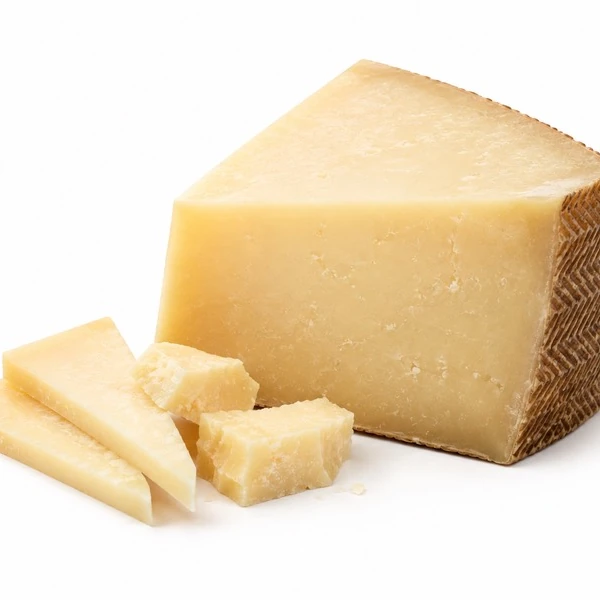
Spain's signature sheep's-milk hard cheese, nutty with a long finish.
TasteNutty and salty, with the depth sheep's milk gives. The labels tell you what you're getting: 'semicurado' is buttery and mild, 'curado' turns clearly nutty, and a long-aged 'viejo' is firm and grainy with a caramel sweetness.
Intensity
TextureFirm, but fatty enough to break softly rather than shatter. Older wheels crumble more and start to crunch with crystals — those grains mean age, not spoilage.
Similar cheeses
How it differsPecorino is its nearest relative — both are hard sheep's milk cheeses. But Pecorino Romano is salty enough to work more like a seasoning, while Manchego keeps its salt in check so you can eat it in slices. Parmigiano, being cow's milk, runs savoury in another direction; what stays with Manchego is that oily, sheepy richness.
Pairing
🍷 WineTempranillo red
🥂 DrinkSherry
🍽️ FoodQuince paste (membrillo), olives, jamón, almonds
How to enjoy
Cut into thin triangles and eaten as is. In Spain, quince paste (membrillo) alongside is the standard, and with jamón, olives and almonds it's a tapas plate on its own.
What to look for
The ageing term decides what you get: semicurado is mild and springy and slices well, curado is nuttier, and viejo is crumbly and strong. These grades come from Spanish food regulation rather than the DOP rules, and the minimum days behind each one shift with the weight of the wheel. A zigzag pattern pressed into the rind plus a casein tab means it was made to DOP rules, which allow only milk from Manchega sheep.
Storage
Wrap in paper, box it, and keep it in the crisper drawer. The rind is coated in wax or paraffin and is not eaten.
⏳ Aging30 days – 2 years (30 days minimum at 1.5 kg or under, 60 days above)
Good to know
The zigzag pattern on the rind is the mark of the woven esparto-grass baskets the curd was once pressed in — back then the grass lent its scent to the cheese as well. Only cheese from Manchega sheep in La Mancha may carry the name.