
Parmigiano
Beginner (as topping) – Intermediate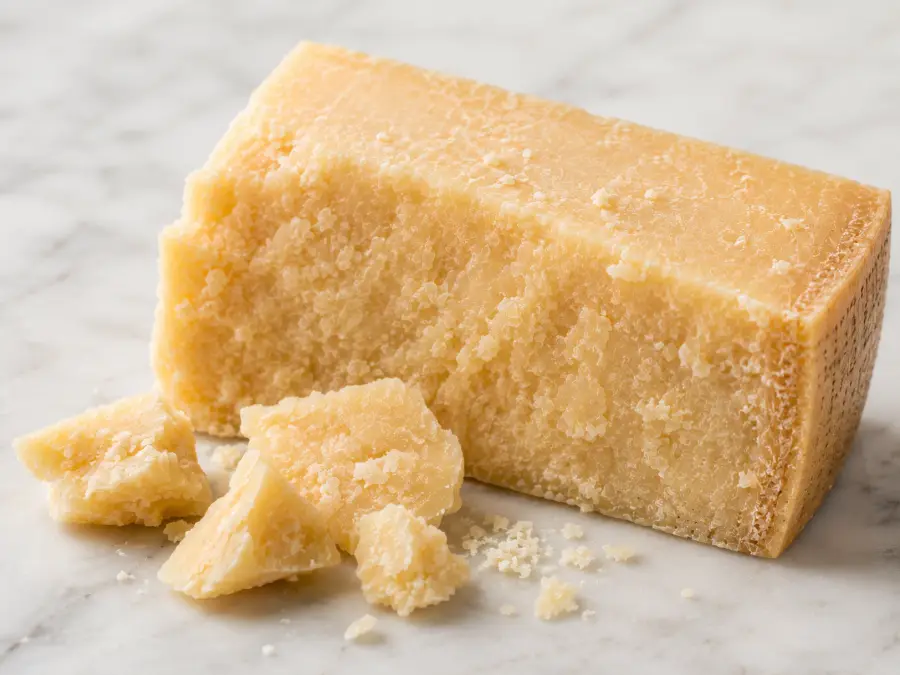
The 'King of Cheeses', an umami bomb — the one you grate over pasta.
TastePowerful umami and saltiness with nutty, broth-like depth — and the month count really does change it. At 12 months milk still shows through and it's mild; by 24 the nuttiness and salt are pronounced; past 36 the aroma sharpens and the crystals multiply.
Intensity
TextureVery hard, with tiny grains that crunch as you chew. They aren't salt but amino acid crystals formed as the proteins break down, so the older the wheel the more you find.
Similar cheeses
How it differsGrana Padano is what it gets measured against — the rules here are the stricter set, so it ages longer and the herds are fed more narrowly. That is what puts the savouriness and the salt further forward. Pecorino is sheep's milk, so its savouriness runs in a different direction altogether.
Pairing
🍷 WineFull-bodied red (Chianti)
🍽️ FoodPasta, risotto, balsamic, pear
How to enjoy
Don't slice it — break it along the grain with a spoon or an almond-shaped knife so the grainy bite survives. Grate it over pasta and risotto, and never bin the rind: drop it into soups and stews for a huge umami boost.
What to look for
Pre-grated tubs lose aroma quickly — buy a piece and grate it as you go. Grana Padano costs less for the same weight, so if it is going into everyday cooking rather than onto a board, that is the sensible buy.
Storage
Wrap it or box it airtight and keep it in the crisper at 4–8°C. Too dry and it hardens, too damp and it molds, so change the wrapping when it gets wet. A 24-month wedge keeps about a month once cut; 12–18 month cheese holds more moisture, so finish that within two weeks.
⏳ Aging12–36+ months (12 is the legal minimum)
Good to know
Three ingredients — raw milk, salt, rennet — and no additives, so even the rind is edible. Within 48 hours of making, nearly all the lactose has turned to lactic acid, which is why it usually sits fine with lactose intolerance. Only cheese made around Parma, Reggio Emilia and Modena may carry the name, and the pin-dotted lettering on the rind is the proof.