
Stilton
Intermediate–Advanced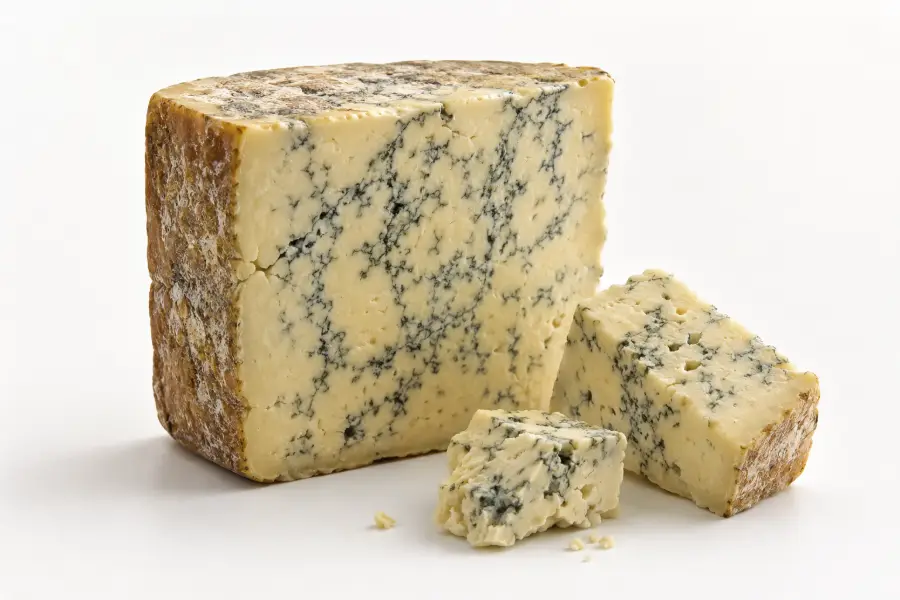
England's signature blue cheese — creamy with nutty depth.
TasteSalty with nutty, buttery notes; firmer and richer than Gorgonzola. It's gentler than most blues, so if Roquefort felt like too much, start here.
Intensity
TextureMoist and softly crumbly with blue veins running through. The rough grey-brown crust forms on its own and is trimmed off rather than eaten.
Similar cheeses
How it differsThis sits in the middle of the three — not as salty or as sharp as Roquefort, drier and more crumbly than Gorgonzola. It shares cow's milk with Gorgonzola yet breaks apart far more readily. For crackers, or alongside port, this is the one that is treated as the standard.
Pairing
🍷 WinePort wine
🍽️ FoodCrackers, pear, walnut, celery
How to enjoy
A little at a time with Port, on crackers. Scooping the middle out with a spoon is the famous ritual but it isn't advised now — it exposes more surface and dries the rest out. Cut it in flat slices from top to bottom instead.
What to look for
Look for Blue Stilton PDO — only cheese made from pasteurised cow's milk in Derbyshire, Leicestershire or Nottinghamshire may use the name. You want veining that radiates evenly from the centre outward. Avoid paste that has dried yellow, veining bunched to one side, or a cut face that looks unusually wet.
Storage
Wrap in foil, put it in a lidded box, and keep it in the crisper drawer, away from other food — the smell travels. With a large wedge, cut and wrap it in portions first so the rest does not dry out.
⏳ Aging9–15 weeks
Good to know
A Christmas staple in Britain. Only cheese made in Leicestershire, Derbyshire and Nottinghamshire from pasteurised milk may use the name — which means the village of Stilton, over in Cambridgeshire, can't legally make Stilton. The village was where it was sold on the coaching road, not where it was made.