
Gorgonzola
Intermediate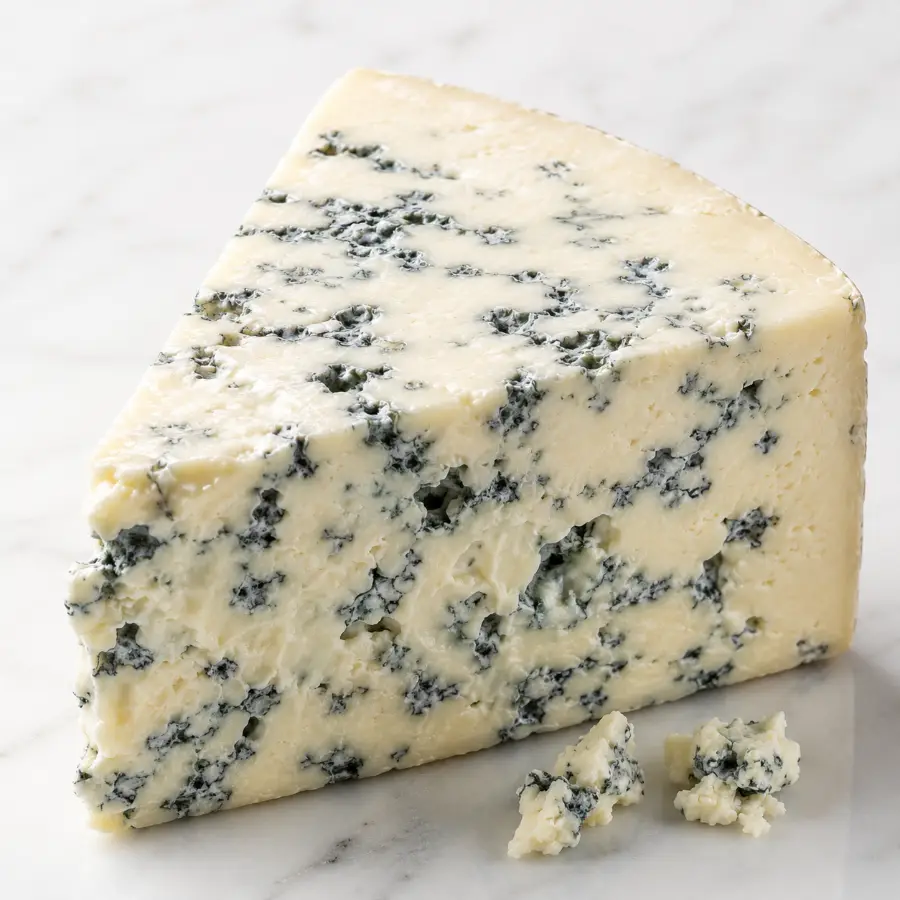
An intensely flavored blue cheese made by blue mold.
TasteSalty and sharp with a strong punch — and it splits into two quite different cheeses. 'Dolce' leads with a creamy sweetness and little blue bite, which makes it the easy entry point; 'piccante' brings salt and a peppery heat right to the front. Read the label and you'll rarely pick wrong.
Intensity
TextureDolce is soft enough to spoon and spread; piccante is firm and crumbles. The blue veining only grows where wheels are pierced with steel needles during aging to let air in.
Similar cheeses
How it differsOf the three classic blues this is the mildest and creamiest. Roquefort is sheep's milk, much saltier and sharper; Stilton is also cow's milk but drier and more crumbly. Ranked by intensity it runs Gorgonzola, then Stilton, then Roquefort. If someone is trying blue cheese for the first time, gorgonzola dolce is the gentlest place to start.
Pairing
🍷 WineSweet wine (Port, Moscato)
🍽️ FoodHoney, pear, walnut, steak, pizza
How to enjoy
A little at a time with honey is the classic. Dolce spreads on bread and melts beautifully into risotto, polenta and pasta sauce; with piccante, use less and crumble it on at the end.
What to look for
Decide between dolce and piccante first. Dolce is aged 50 to 150 days and is soft enough to spread; piccante runs up to 270 days and is firmer, more heavily veined and considerably stronger. Beginners want dolce. The DOP mark printed on the foil means it came from a producer the consortium has authorised.
Storage
Wrap in foil, put it in a lidded box, and keep it in the crisper — foil blocks the smell better than paper. Store it away from other food and finish a cut piece within 2–3 weeks.
⏳ AgingDolce 50+ days · piccante 80+ days (typically 2–4 months)
Good to know
It can only be made in designated parts of Lombardy and Piedmont, and takes its name from the town of Gorgonzola near Milan. The mold that draws the blue veins is the same species used in Roquefort (Penicillium roqueforti). Honey makes it far more approachable.