
Brie
Beginner–Intermediate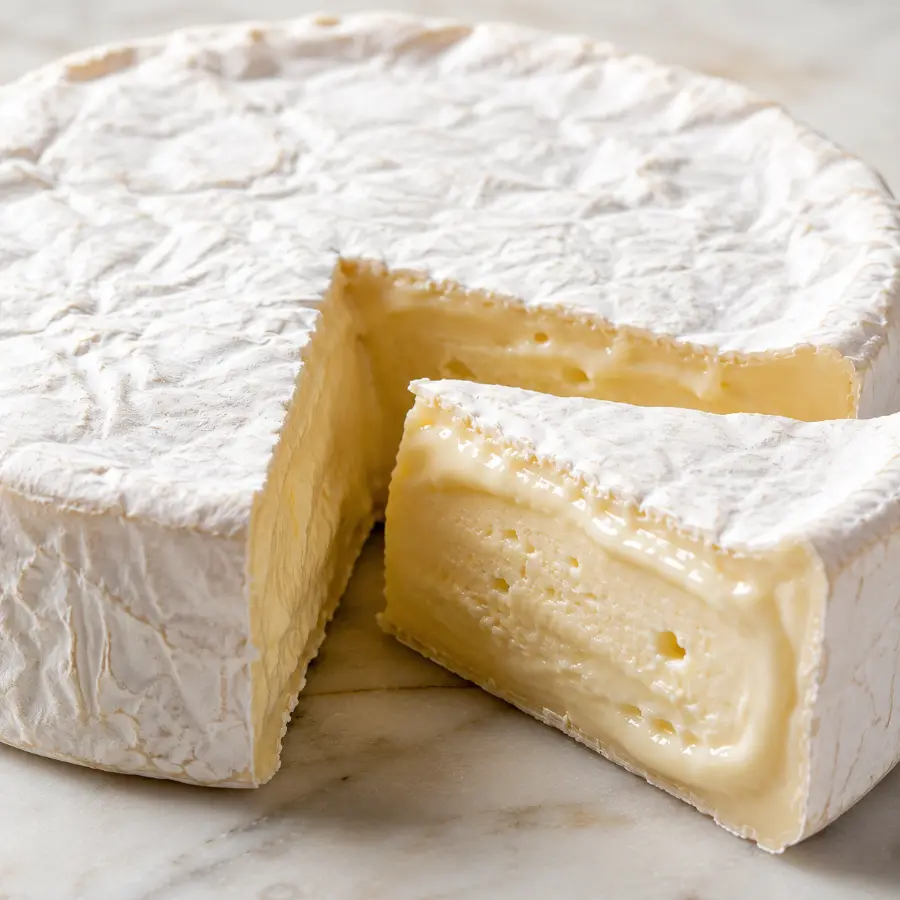
White rind outside, creamy inside — the 'Queen of Cheeses', and the benchmark for every bloomy-rind cheese.
TasteMushroom and damp-earth aromas over buttery, creamy richness with a gentle salt. Butterfat runs above 60%, so the flavor lingers. As it ripens the mushroom note deepens and the finish turns tangy. The rind carries most of the aroma and the center is mildest, so cut so each bite has both.
Intensity
TextureAt room temperature the center slumps and nearly flows; straight from the fridge it's firm as butter. The thin, velvety white rind is eaten too — peel it off and half the aroma goes with it. A white, chalky core in the middle means it isn't ripe yet.
Similar cheeses
How it differsCamembert is the one it gets confused with. Brie is made as a large wheel and sold in wedges; Camembert is a small whole round. Brie carries more fat, so the paste is butterier, while Camembert runs more as it ripens and tastes grassier and earthier. Richer is brie, stronger-smelling is camembert.
Not for everyoneThat mushroomy, damp-earth aroma can read as bitter or fishy the first time you meet it, and the rind side is where it is strongest. What is not about aroma is paste that looks ready to burst or a rind blotched with brown — that is a question of condition.
Pairing
🍷 WineChampagne, light red
🥂 DrinkCider
🍽️ FoodBaguette, honey, nuts, crackers
How to enjoy
Thirty minutes out of the fridge brings the aroma and texture back. Spread it on baguette, or pair with honey, jam and nuts so the salt and sweetness meet. A whole wheel baked at 200°C for 10–15 minutes turns into something you scoop. Cut it like a cake — wedges from the center — so rind and paste are shared evenly.
What to look for
Press it. A ripe wheel has an even white rind and gives slightly in the middle. Rock hard means it needs a few more days; bulging or blotched brown means it is past. Buying a wedge, look at the cut face — a chalky white core running through the centre means it never finished ripening, and it will not improve once cut.
Storage
Wrap in parchment and keep it in the crisper drawer. Sealed tight in plastic the rind can't breathe and turns ammoniated. Once cut, the exposed face has no rind, so ripening all but stops — finish it within a week.
⏳ Aging4–8 weeks (the rind mold ripens it from the outside in)
Good to know
The name comes from the Brie region east of Paris, but only 'Brie de Meaux' and 'Brie de Melun' are protected, both AOC-certified in 1980. Most supermarket Brie is plain pasteurized Brie. The wide 36cm disc shape isn't for looks: a cheese that ripens from the outside in would never ripen through if it were thick.