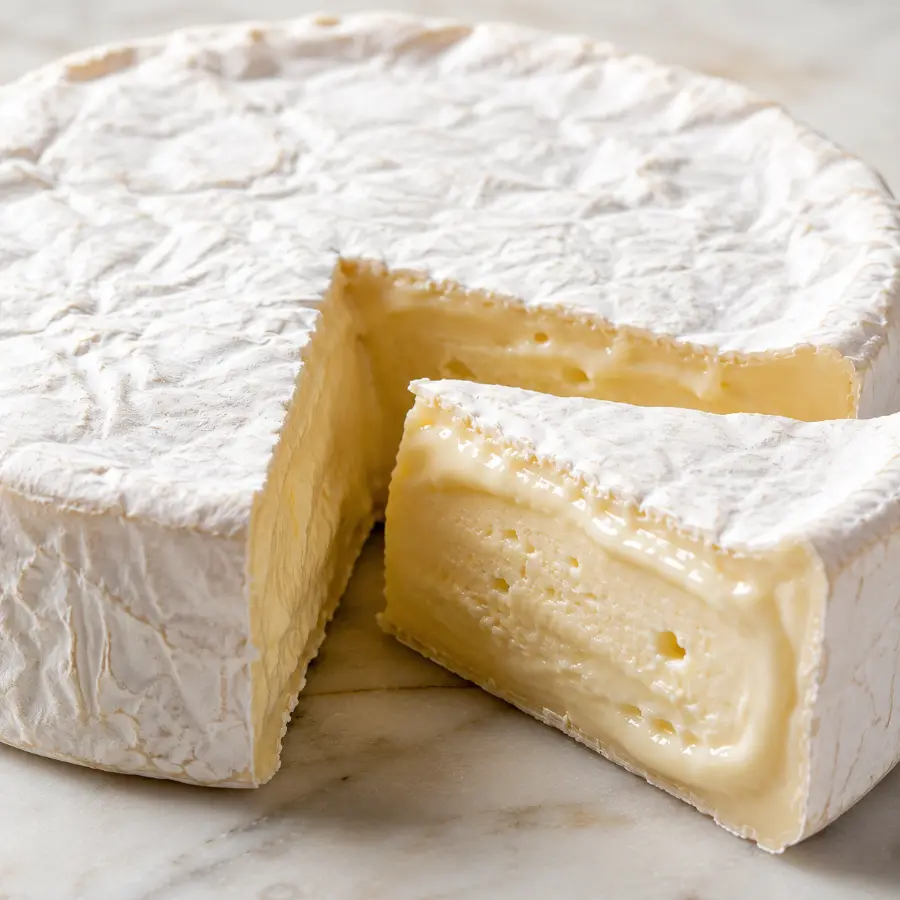
Side by side they look almost identical. One mouthful says otherwise, and most of the difference comes down to how big the wheel is.
They are made at different sizes
Both are French cheeses grown under a bloomy white rind, but they come from different places — brie from east of Paris, camembert from Normandy. The first visible difference is size. Brie is made as a wheel over 30 cm across and sold in wedges; camembert is a small disc about 11 cm across, sold whole. As a rough rule at the counter: a wedge is brie, a little wooden box is camembert.
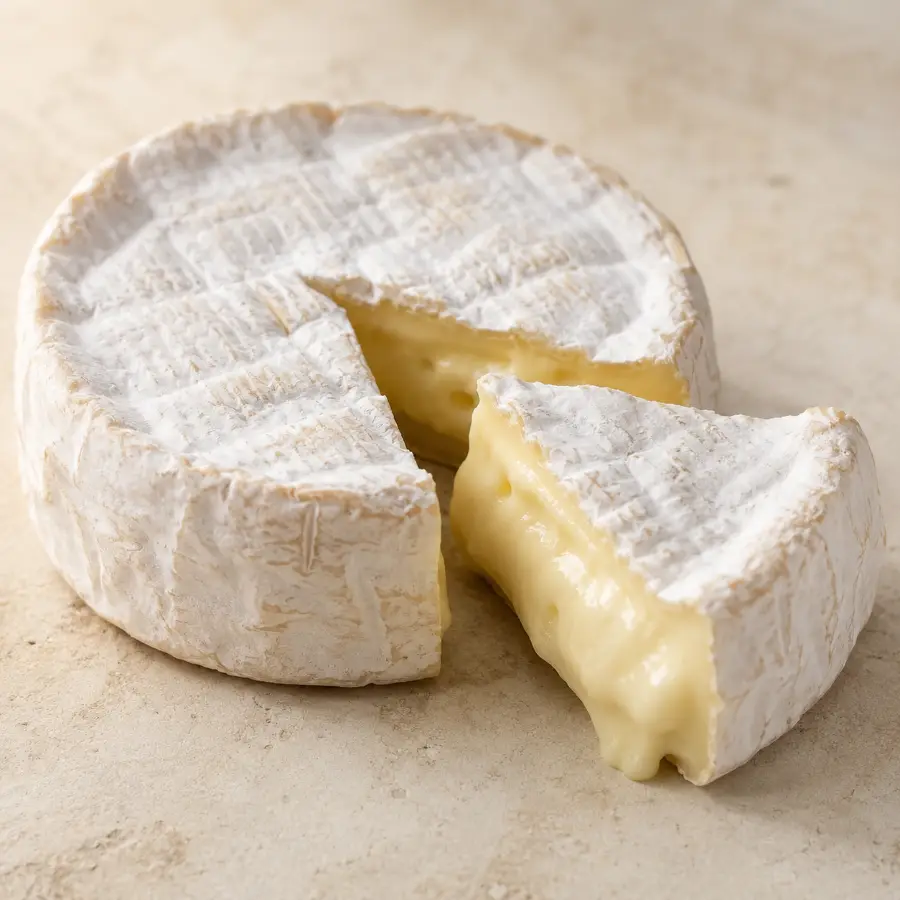
Alike on the outside, separated by size:
And the size is what splits the flavour
This is the heart of it. A bloomy-rind cheese ripens from the rind inwards, and the smaller the wheel, the larger a share of it the rind represents. So a small camembert carries the rind's mushroom and wet-earth character deep into the paste — a ripe one can reach truffle, and a farmyard note behind that. A large brie has proportionally more paste, so that character thins out and buttery richness leads instead.
In short: brie is richer, camembert is stronger
Brie runs over 60% fat in dry matter, which is why it coats the mouth, and most supermarket brie has cream added on top of that. Camembert does not compete on richness; it competes on aroma. If brie struck you as mild, camembert is where that changes. If camembert was too much, brie is the comfortable one. Neither is better — they are about one step apart in intensity.
The real brie and the real camembert are separate things
The words brie and camembert are not protected and anyone may use them. What the law protects are the longer names — Brie de Meaux, Camembert de Normandie — which may only be made in defined places, from unpasteurised milk, in a defined way. Nearly everything on a supermarket shelf is plain brie or plain camembert: pasteurised, often with cream added, milder and much easier to handle. That is not a criticism, only a different product. If you want the original, look for the long name on the label.
How to pick a ripe one
Press it. A rind that is white and even, giving slightly when you push the middle, is ready. Firm as a stone means it needs a few more days. Bulging as though it might burst, or a rind blotched brown, means it is past — and with camembert, check whether the inside of the box has gone damp. Buying brie by the wedge, look at the cut face: a chalky white core still sitting in the centre means it has not finished ripening.