
Do you cut the white coat off a brie? Rinds divide into two kinds, and the line between them is simpler than it looks.
The rule is one sentence
If it grew on the cheese, eat it. If it was put on the cheese, peel it. That single line settles almost every case. Bloomy white rinds, the orange rinds built by washing, and the hard natural crusts that form during ageing are all part of the cheese and all edible. Wax, cloth and paper are packaging, added later to keep the cheese from drying out. When you are unsure, look at where rind meets paste: a rind that grew there runs into the paste continuously, while something wrapped around it stops at a clean edge.
With bloomy rinds, do eat it
The white coat on a brie or camembert is not merely permitted — it is the point. That rind's mould is what ripened the cheese from the outside in. Cut it away and half the aroma goes with it, leaving a fairly bland paste behind. Take rind and paste together in the same mouthful and you finally taste what the cheese was made to be. One exception: any colour that is not the original rind — green, black, pink — is a different mould, and that one you do not eat.
Meant to be eaten rind and all:
The orange rinds built by washing
Taleggio, raclette and their relatives have their surfaces wiped with brine throughout ageing. Particular bacteria settle in as a result, tinting the rind orange and making it smell considerably stronger. People throw these away thinking the cheese has gone off, but that smell is how the cheese is made, and the rind is edible. It carries the most concentrated aroma of any part, so if it is new to you, shave it thin and eat it with the paste rather than on its own.
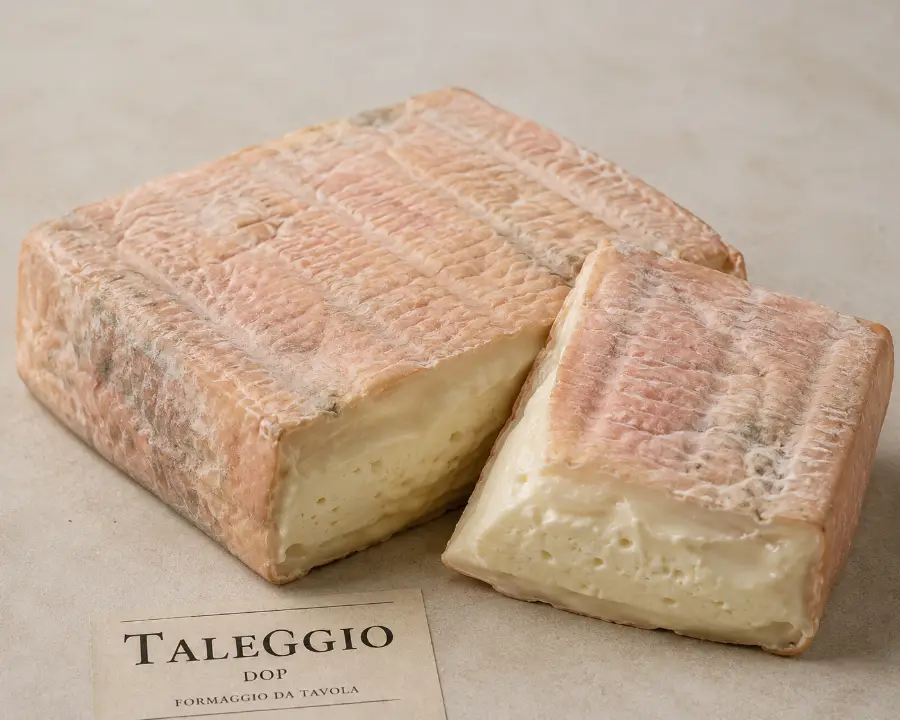
Rinds washed into being:
The hard crusts that form by themselves
Long-aged cheeses like parmigiano and comté dry at the surface until a hard crust forms. It came from the cheese and it is edible, but it is tough enough to be unpleasant to chew and hard enough to be unkind to teeth, so most people cut it off. Do not throw it away, though. Simmered in a pot it gives up a remarkable amount of savour.
Crusts formed by drying during ageing:
These ones you peel
Wax is there to stop the cheese drying and is not food. Whole waxed goudas are the obvious case, and the cloth on a clothbound cheddar is the same idea. Roquefort arrives with no rind at all, wrapped in foil that does the rind's job — and the foil is, of course, packaging. Some cheeses are sold with paper or a thin film still clinging to one face, so it is worth a look before you cut.
Wrapped in something that comes off first:
And if you would rather not
Then do not. Eating the rind is not a rule or a matter of manners. The one case worth trying at least once is a bloomy rind, because half the reason to buy that cheese lives there. And if you do cut a rind away, the exposed paste dries quickly — wrap it in greaseproof paper and eat it within a few days.