
Halloumi
Beginner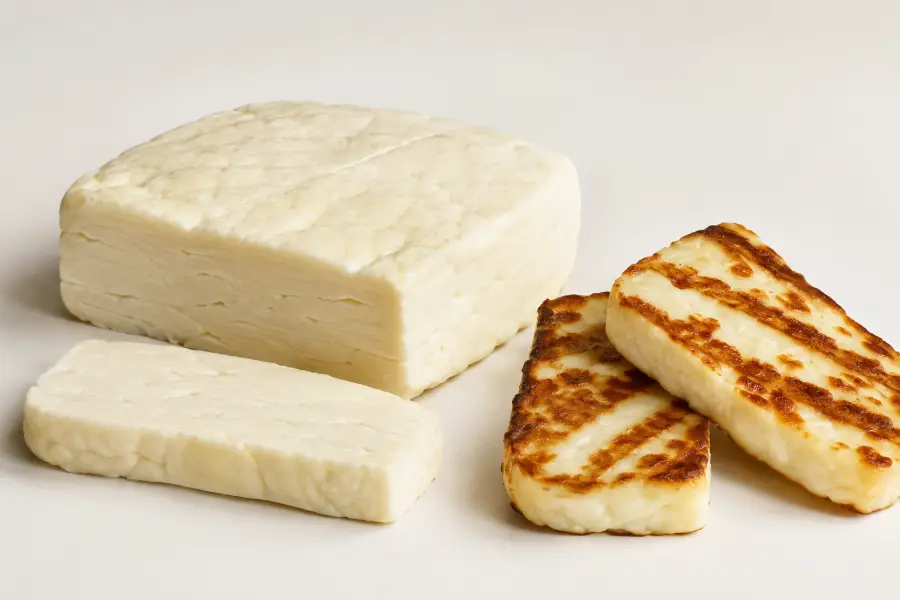
The cheese that does not melt — it browns on the outside and stays chewy within.
TasteSalty and clean, and the frying brings out a real nuttiness. Many blocks are folded around mint leaves — originally a way to keep the cheese before refrigeration, kept on now purely for the flavor.
Intensity
TextureSqueaky and springy — you can hear it as you chew. Heat does not make it flow; it keeps its shape.
Similar cheeses
How it differsIt overlaps with feta in that neither melts, so both can go on a grill. The difference is what heat does: feta crumbles and falls apart, halloumi stays squeaky and holds its shape when you turn it. Mozzarella is the opposite pole — it stretches and melts where halloumi never does.
Not for everyoneThe squeak against your teeth throws some people off the first time. It comes from a cheese built not to melt, so it is not a sign you bought the wrong thing. The same property is why it turns rubbery once it cools — eat it straight off the pan and that problem disappears.
Pairing
🍷 WineDry rosé
🥂 DrinkBeer, lemonade
🍽️ FoodLemon, watermelon, mint, grilled vegetables
How to enjoy
Cut slices about a centimetre thick and give them one to two minutes a side in a dry, hot pan. Eat them straight away — cooled halloumi turns rubbery. A squeeze of lemon settles the saltiness, and watermelon or grilled vegetables play salt against sweet.
What to look for
Check the milk proportions in the ingredients. The Cypriot PDO requires sheep and goat milk to make up more than half, but a transition runs to 2029, so much of what is sold now is largely cow's milk and correspondingly milder. It is a salty cheese: soaking it in water for ten minutes before grilling draws out salt without making it soggy.
Storage
In its brine until opened, then sealed in the fridge and eaten within a week. Salt keeps it well, and freezing does it no harm if you're going to fry it anyway.
⏳ AgingShort, kept in brine
Good to know
It resists melting because the curd is cooked in whey at close to 97°C for around an hour. The proteins set then, and heat cannot loosen them again. Since 2021, only cheese made the traditional way in Cyprus may be called halloumi in the EU.