
France, Italy, Switzerland, Britain, the Netherlands and the Mediterranean. Cheese names are usually place names — knowing each country's character lets you guess at a cheese you have never met.
Almost every cheese is named after a place
Brie is a region east of Paris, gouda a Dutch city, cheddar a gorge village in south-west England. Roquefort, parmigiano and emmental are the same. The reason is straightforward: before refrigeration, cheese was the only way to keep milk, and every village solved that problem slightly differently — different climate, different grass, different animals. So the map of Europe is effectively a map of cheese. The name alone tells you something about the ground it came from.
Names that double as points on a map:
So which country did cheese itself come from?
No single one can be named — and that is not evasion, it is what the evidence actually shows. The oldest confirmed traces survive in pottery. Perforated sherds from Kuyavia in Poland carry milk fat roughly 7,000 years old, and since the holes were there to drain whey from curd, that is taken as effectively conclusive evidence of cheesemaking. The same thing was happening at much the same time on the Dalmatian coast of Croatia: in 2018 an isotope analysis of the fatty acids in pottery there put cheese production at 5200 BCE, some 7,200 years ago.
Why is a piece of pottery the evidence?
Because cheese does not survive. What lasts a few thousand years is not the cheese but the vessel that held it, so archaeologists analyse the fat that soaked into the clay. Carbon isotope ratios can separate meat fat from milk fat and, beyond that, milk from cheese — draining the whey away leaves the ratio measurably different. Perforated pots are the prize find. They look almost exactly like the sieves a modern dairy uses, and if what comes out of the clay is milk fat, there is only one thing they can have been for.
Is the accidental-discovery story true?
The famous version has a trader crossing a desert with milk in a pouch made from a calf's stomach, arriving to find it set. Whether it happened is unknowable. Chemically, though, it checks out exactly: the stomach of a young ruminant contains the enzyme that sets milk, and a day of jolting in desert heat supplies the rest. Something of that kind probably happened in many places, more than once. Which is another reason the question of country has no answer — cheese is less an invention by one person than a place that people who milk animals eventually arrive at.
France — soft, and led by aroma
De Gaulle is supposed to have grumbled about the impossibility of governing a country with 246 varieties of cheese. The real figure is far higher; more than a thousand are counted today. French cheesemaking developed around handling mould and humidity to draw out aroma — growing a white bloom on the surface to ripen the cheese inward, or using the damp of caves to raise blue veins. The results are yielding in texture and forward in smell, and they do not keep especially well. Which is exactly why the French buy cheese in small quantities, often.
The ones that took their names here:
Italy — from same-day fresh to several years old
The widest range of anywhere. Cheeses made this morning and eaten this evening sit in the same tradition as extra-hard wheels aged for years and inspected with a hammer. Parmigiano really is tested that way: a specialist taps each wheel and listens, because a hidden crack changes the sound. Italy also draws a firm line between cheese for cooking and cheese for eating. And the milk shifts with the map — cow in the north, more sheep and buffalo as you go south, exactly tracking the climate.
Same-day fresh through to years old:
Switzerland — made in the mountains, built to last
Milk drawn in the summer had to feed people through an Alpine winter, so the cheeses became large, firm and long-lived. Wheels made at high summer pastures were carried down to the villages in autumn along with the cattle, which meant they had to survive the journey. Trapped gas from ageing gives some of them their holes, and their willingness to melt produced fondue and raclette. Swiss cheese also tends towards the mild and nutty, because restraint with salt and aroma is what long keeping required.
These came down off the mountain:
Britain — firm and nutty
Wrapping in cloth and pressing became the standard here, giving cheeses that are dense and prone to crumbling. Cheddar takes its name from Cheddar Gorge in south-west England, whose caves held a steady temperature and humidity and served as natural ripening rooms. The name was never legally protected, so it is now made everywhere and is the most-produced cheese name in the world. Britain also gave us blue cheese with port at Christmas, and the tradition of lunch built from bread, cheese and pickle.
Two strands out of Britain:
The Netherlands — mild and easy to handle
These were cheeses made to be sold abroad, so they developed towards the inoffensive and the durable, and the waxed round became their signature — months at sea demanded nothing less. Young, they are gentle; aged, they develop caramel sweetness and crunchy crystals. Cities like Alkmaar still stage their traditional cheese markets as public events, with white-dressed carriers running wheels across the square on wooden barrows.
The cheese that stands in for the country:
Spain — sheep's cheese from a dry plateau
La Mancha is hot in summer, cold in winter and short of water. Cattle struggle there; sheep do not. So the face of Spanish cheese is a pressed, firm sheep's-milk wheel. The zigzag pattern on its rind is a fossil of the woven grass moulds it was once pressed in, now written into the specification. Young, it still tastes of milk; with age it turns nutty and properly salty. The Spanish eat it with quince paste.
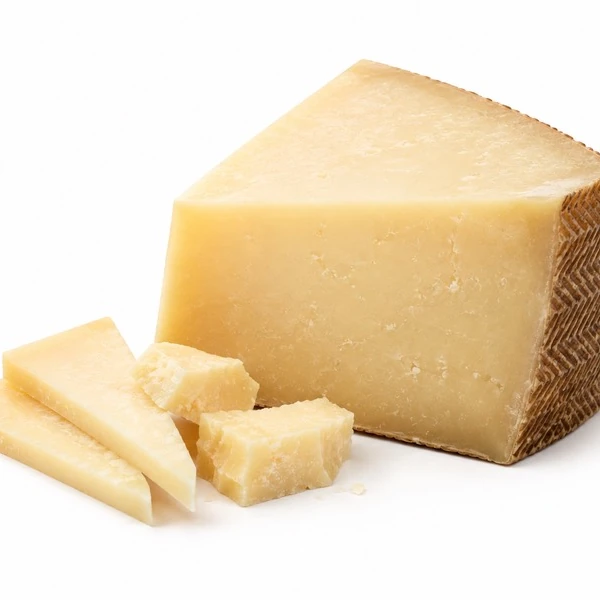
What the plateau's sheep give:
Greece — among the world's biggest cheese eaters
An unexpected statistic: measured per person per year, Greece sits at the very top of the world's cheese consumption tables, above 27 kilograms in 2023, level with France. Most of that is the white sheep's-milk cheese sold sitting in brine, the one that arrives in slabs on a salad. In a hot climate, keeping cheese submerged in salt water was the most reliable preservation there was, and the method simply stayed. It is assertively salty, and olive oil and tomato balance it exactly.
A staple of the table here:
Cyprus — a cheese designed to be grilled
This eastern Mediterranean island makes a cheese that will not melt, because during production it is cooked in hot whey and its proteins set firm in advance. Put it in a pan and it browns outside while staying springy within. In a hot country without refrigeration, that was a practical advantage. Today it has become a staple protein in vegetarian cooking across Europe. The idea of cheese as something you grill like a steak still surprises most people the first time.
Built from the start to be cooked:
Geography decides the cheese
All of the above compresses into one sentence. Mountains give you large, firm cheeses; hot places give you salty ones kept in brine; damp temperate places give you soft cheeses with big aromas. Lowlands with grass enough for cattle give cow's-milk cheese, while hard uplands give sheep and goat. Which is why checking the origin of an unfamiliar cheese tells you most of what you need. An Alpine name promises firm and nutty; a Mediterranean island promises salt.
There is a cheese world beyond Europe
The story does not end at the edge of Europe. South Asian paneer is set with lemon juice or vinegar rather than rennet, so it never melts — which is why it can be cubed into a curry and still be there at the end. Bengal makes a softer version of the same curd, chhena, and builds sweets from it. Mexico has queso Oaxaca, which is startlingly a pasta filata cheese made exactly like mozzarella and pulled into strands; local history credits a nineteenth-century girl who over-curdled her milk and tried to rescue it with hot water. Salty, hard cotija is the grating cheese there, and is often called the Mexican parmesan. In north-eastern Brazil, queijo coalho was built to survive a tropical climate and is sold on skewers grilled over charcoal, while labneh across the Middle East is strained yoghurt sitting right on the border of cheese. The United States has its own originals too: Monterey Jack began at an eighteenth-century Californian mission, and Colby came out of the Wisconsin town of that name in 1874.
Korea has a cheese history too
It starts in Imsil, in North Jeolla province. A Belgian priest named Didier t'Serstevens — known in Korea as Ji Jeong-hwan — arrived at the Imsil parish in the 1960s and, looking for something that might bring income to a poor mountain village, formed a cooperative with farmers who kept goats. In 1967 they built the country's first cheese factory: a building of about sixteen square metres, some 170 square feet and a twelve-metre ripening tunnel. He wrote to European cheesemakers asking how it was done, failed repeatedly, and produced camembert the following year. Every domestic cheese on a Korean supermarket shelf owes something to that beginning. He died in 2019, and Imsil is still a cheesemaking town.
This was the cheese Imsil managed first: