
Cheddar
Beginner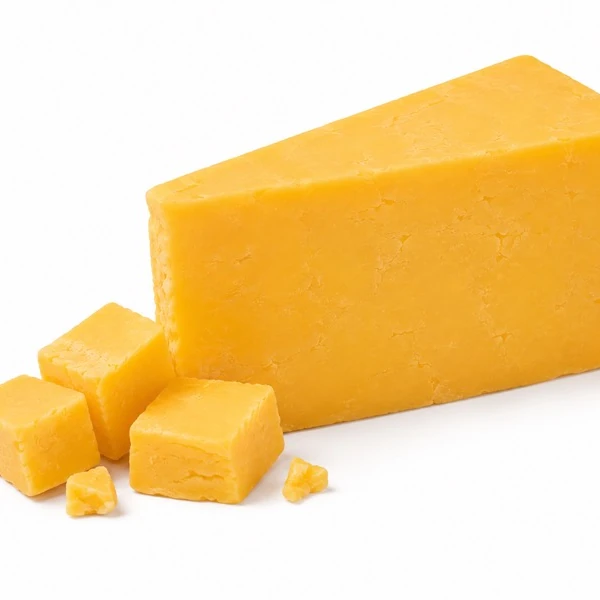
The most popular cheese of all — savory, salty, and goes with everything. Age changes it completely.
TasteYoung mild cheddar tastes close to milk; with age the savory saltiness deepens and a sharp tang moves to the front. Near two years it turns nutty and brothy, and you'll catch small white crystals between your teeth, a sign of real age. In cheddar these are usually calcium lactate rather than the amino acid crystals that crunch in parmigiano.
Intensity
TextureThe curd is stacked, turned and restacked to press out whey — the 'cheddaring' step — which lays the grain down tight. Young cheddar is smooth and springy; aged cheddar loses moisture, hardens, and breaks along that grain.
Similar cheeses
How it differsGouda ages in the opposite direction — it keeps its milky sweetness and turns caramelly, where cheddar gets sharper and saltier. Parmigiano is a grating cheese, so the two are never interchangeable. The thing most often mistaken for cheddar is the orange square slice, which is a processed cheese usually sold as American cheese.
Pairing
🍷 WineMedium-bodied red
🥂 DrinkBeer, cider
🍽️ FoodBurgers, sandwiches, apples, crackers
How to enjoy
For melting, reach for mild or medium. Sharp aged cheddar tends to split and go oily under heat, so slice it as is or add it at the end. Sandwiches, burgers, gratins and mac and cheese are the classics; apple or cider cuts through the salt.
What to look for
Read the label rather than the front of the pack. Processed slices are legally a different product, often with vegetable oil high in the ingredient list. On blocks, mild, medium and sharp describe age, but no regulation defines where one ends and the next begins, so the words mean whatever that brand decided.
Storage
Wrap in parchment, then loosely in plastic or a lidded box, and keep the cut face from drying out. If mold appears, cut a good 2.5cm around and below it and the rest is fine — a trick that only works on hard cheese.
⏳ Aging3 months – 2+ years
Good to know
Named after the village of Cheddar in Somerset and its cave ripening — but 'cheddar' itself isn't a protected name, so it's made worldwide. The traditional article is West Country Farmhouse Cheddar (PDO), which must be matured at least nine months; cloth-binding is the traditional method rather than something the rules require. The orange color comes from annatto; it's naturally pale.