
Gouda
Beginner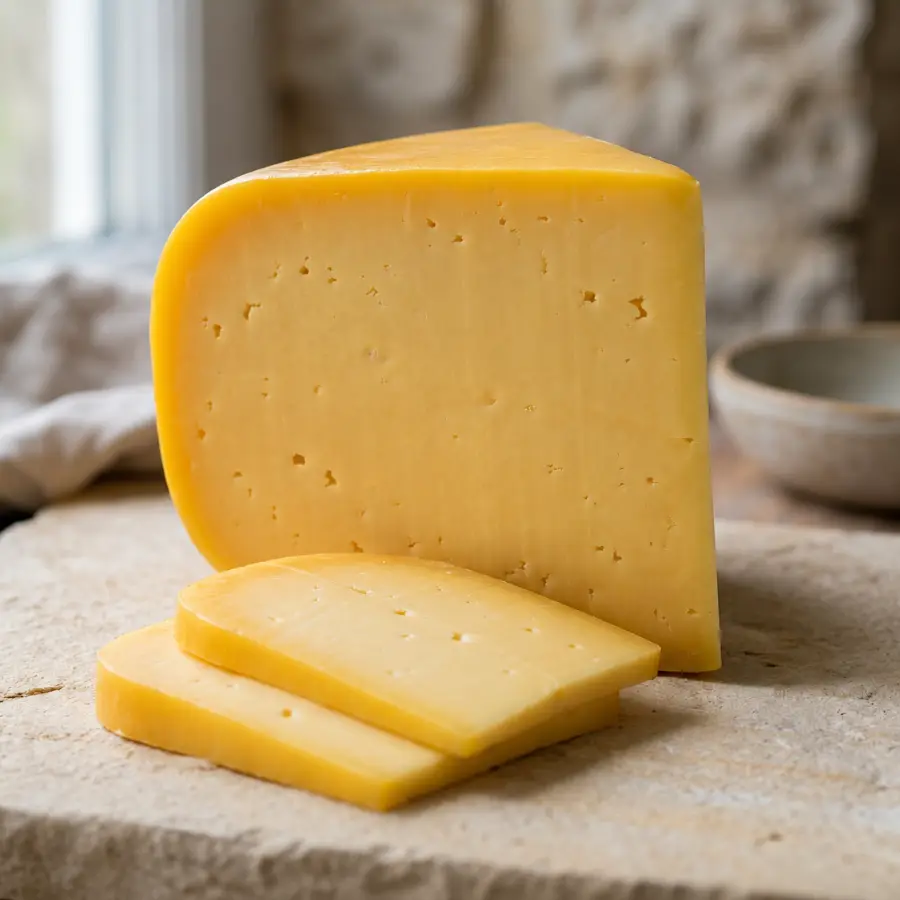
The sweet, mellow national cheese of the Netherlands — perfect for beginners.
TasteStarts sweet and savory, then turns caramel and butterscotch as it ages while the salt climbs. The Dutch name each stage: 'jong' at about four weeks is mild and milky, 'jong belegen' at eight to ten weeks is where the nuttiness first shows, 'belegen' at roughly four months is distinctly nutty, and 'oude' past ten months reads like a different cheese entirely.
Intensity
TextureSmooth and pliable when young; aged wheels turn firm with white crystals that crunch. The colored wax is there to stop it drying and isn't eaten — young cheese usually wears red or yellow, well-aged cheese black.
Similar cheeses
How it differsCheddar goes acidic where this does not — aged gouda leans milky and caramelly, aged cheddar gets tangy and sharply salty. Emmental differs in both holes and aroma. The cheese most often confused with it is edam, made from milk with some fat removed, so it tastes plainer and has more spring to it. Denmark's havarti is another frequent mix-up: both have their curd rinsed to wash out lactose, which is why both come out mild and faintly sweet. Havarti is the softer of the two and is scattered with eyes the size of a rice grain.
Pairing
🍷 WineRed or white alike
🥂 DrinkBeer
🍽️ FoodApple, crackers, mustard
How to enjoy
Young Gouda melts beautifully — toasties, sandwiches, grilled cheese. Aged 'oude' Gouda has lost too much moisture to melt well, so shave it thin and eat it as is, or grate it.
What to look for
Colour is a decent guide to age — young gouda is pale cream, long-aged goes deep amber. Past about ten months you start finding crunchy crystals; these are tyrosine from protein breaking down, a sign of proper ageing rather than anything wrong. Dutch shops often code the wax colour by age.
Storage
Wrap in parchment, then loosely in plastic or a lidded box, and keep it in the crisper drawer. Young Gouda is wet enough that it wants eating within two weeks; well-aged wheels keep longer.
⏳ Aging4 weeks (young) – 2+ years (aged)
Good to know
It's named for the market in Gouda where it was traded, not for where it was made — so the name was never protected and the cheese is made worldwide. The protected Dutch names are things like 'Noord-Hollandse Gouda' (PDO). Locally it sounds closer to 'How-da' than 'Goo-da'.