
Cottage cheese
Beginner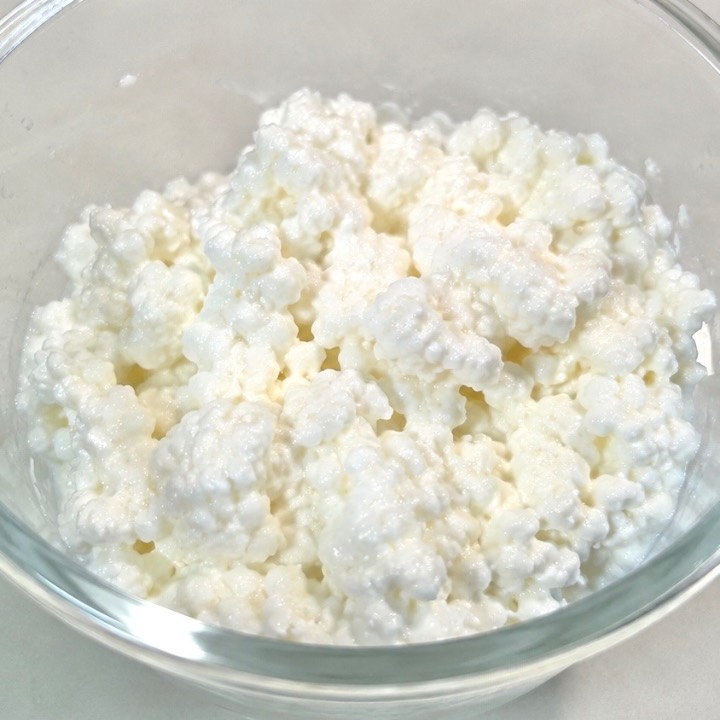
A mild fresh cheese you eat curd and all — low in fat, high in protein.
TasteClose to plain. A faint milky tartness and a little salt, and that is about it. The curds are rinsed to wash the salt back out and then dressed in cream, so every spoonful is bland curd and rich cream at once.
Intensity
TextureThe curds stay distinct under the teeth, with cream filling the gaps — the opposite of smooth, spreadable cream cheese. It's sold in large and small curd: the large has more bite, the small carries more liquid.
Similar cheeses
How it differsThe real question is whether it can stand in for ricotta, and the answer depends on the job. Anywhere it is spooned on top, they swap freely; anywhere it needs to bind smoothly — lasagne filling, desserts — it does not, because the large curds and loose liquid weep. Draining it and blending it smooth gets you close, but that is an extra step. Cream cheese is not a comparison at all.
Not for everyoneThe curds sitting in liquid get mistaken for cheese that has spoiled or split. That is simply how it is made and sold. Some also find it bland, which follows from the curds being rinsed of their salt before the cream goes back on. What is a different matter is a sour smell — that means it is past it, so check the storage note.
Pairing
🥂 DrinkCoffee
🍽️ FoodPeaches or pineapple, toast, salad, honey, black pepper and olive oil
How to enjoy
Eat it by the spoonful, plain or topped with fruit and honey. Good on salad or toast, and fine with nothing but pepper and olive oil.
What to look for
Two things on the label matter: curd size and milkfat. Large curd is set with rennet, so it is less acidic and reads slightly sweeter; small curd is tangier. At 4% the dressing is thick and creamy; at 1 to 2% it is looser and plainer. If you have no preference yet, 2% is the safe middle.
Storage
Keep it sealed in its own liquid and eat within three or four days of opening. Nothing about it is aged, so it turns sour if left.
⏳ AgingNone
Good to know
The name comes from being made at home in cottages, from the milk left after churning butter. No origin rules govern it, so it varies by country — Germany calls it Hüttenkäse. It is easily confused with ricotta, but they start from different things and carry different proteins: ricotta comes from the whey left over from cheesemaking (whey protein), cottage cheese from the curds themselves (casein). Cottage cheese has more protein and digests more slowly, which is why athletes keep a tub of it.