
Emmental
Beginner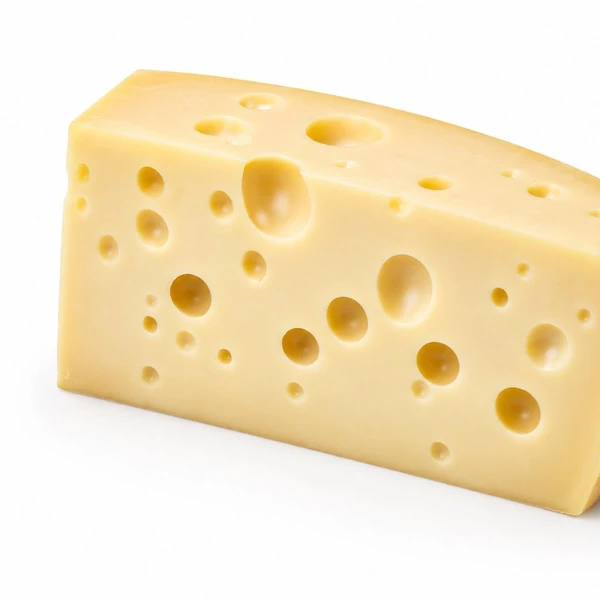
The holey Swiss cheese — the original 'cartoon cheese'.
TasteRoasted hazelnut richness with a gentle sweetness and a note of dry hay. Aromatic but never harsh, which is why it reads as mild. Longer aging deepens the aroma and leaves a faint salty finish.
Intensity
TextureElastic and smooth, with holes (eyes) from cherry to walnut size. It melts well, though it pulls into longer strings than Gruyère.
Similar cheeses
How it differsIf a Swiss cheese has big holes, this is the one — Gruyère is dense, and any openings in it are small. The holes are gas pockets left by propionic acid bacteria fermenting lactic acid, and Emmentaler AOP is the only Swiss AOP cheese allowed to use them. Gouda is a different country and a different culture entirely.
Not for everyoneA fair number of people find the finish bitter, and some say it tastes like milk that has turned. It shows up most when the cheese is eaten cold, straight from the fridge — half an hour at room temperature, or melting it, changes the impression a great deal, and fondue and sandwiches are where this cheese usually goes anyway. The chew gets called rubbery as well, which is really just its springiness. What is not about flavour is a slimy surface or visible mould: that is a question of condition, so check the storage note.
Pairing
🍷 WineWhite wine (Riesling)
🥂 DrinkBeer
🍽️ FoodPotatoes, ham, fondue
How to enjoy
Fine simply sliced, and in fondue the Swiss way is half Emmental, half Gruyère. The eyes make thin slices fall apart, so cut it a little thick for sandwiches.
What to look for
Emmentaler AOP on the label is not the same as a cheese simply called Emmental, which may be made anywhere. Smaller and fewer holes are not a fault: modern milking equipment leaves fewer hay particles for gas to collect around, and in 2025 Switzerland approved adding hay powder to bring the holes back.
Storage
Wrap in parchment, then loosely in plastic or a lidded box, and keep it in the crisper drawer. Moisture pooling in the holes makes the surface slippery, so change the wrapping if it gets wet.
⏳ Aging4–14 months (cave-aged wheels run 12+)
Good to know
The holes are pockets of carbon dioxide, released by propionic bacteria feeding on lactic acid and trapped in the dense paste — the same fermentation that builds the nutty aroma. A wheel weighs 90–120kg, because a cheese has to be big to ripen that long. The Swiss original carries an 'Emmentaler AOP' stamp.