
Grana Padano
Beginner (as topping)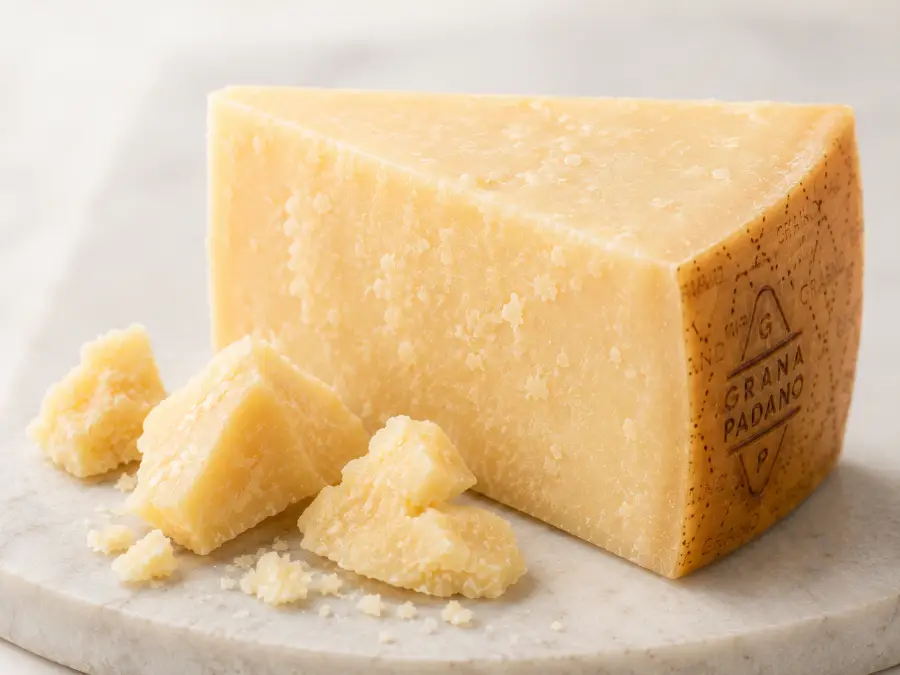
Parmigiano's everyday cousin — milder, softer, and better value.
TasteSalty, savory umami; milder and softer than Parmigiano, which actually suits dishes where the cheese shouldn't shout. 'Riserva', aged past 20 months, is noticeably nuttier and sweeter.
Intensity
TextureHard, but moister and less grainy than Parmigiano — it grates easily and melts smoothly into a dish.
Similar cheeses
How it differsThis is what people reach for instead of Parmigiano, and its rules are a little looser — which is why it comes out milder, less salty and cheaper. Grated into a dish the gap mostly closes; eaten in pieces it does not. Pecorino sits apart from both, being sheep's milk.
Pairing
🍷 WineLight red or white
🍽️ FoodPasta, salad, risotto, fruit
How to enjoy
Grated into dishes, or in chunks as a snack. It swaps in for Parmigiano almost anywhere — just taste for salt, since it brings less of it.
What to look for
Look for Grana Padano DOP on the pack or rind. It is close enough to Parmigiano in flavour and meaningfully cheaper, which makes it the practical choice for everyday grating. Wheels aged beyond 20 months get considerably deeper, so if it is going on a board rather than into a pan, buy one with the age stated.
Storage
Wrap in parchment and keep it in a container in the crisper drawer (4–8°C). Cling film traps moisture and invites mould. If the surface dries out, wrap it briefly in a lightly dampened cloth, then back into paper. It takes freezing reasonably well but comes out crumbly, so freeze only what you will grate — keep what you plan to serve in pieces in the fridge.
⏳ Aging9–24 months (9 minimum; Riserva 20+)
Good to know
The name means grain. For all its hardness it will not slice thin — it breaks along the grain in flakes, and that is exactly what it was named for. Push the tip of a knife in and lever a piece off rather than dragging a blade through it, and the grainy bite survives.