
Raclette
Beginner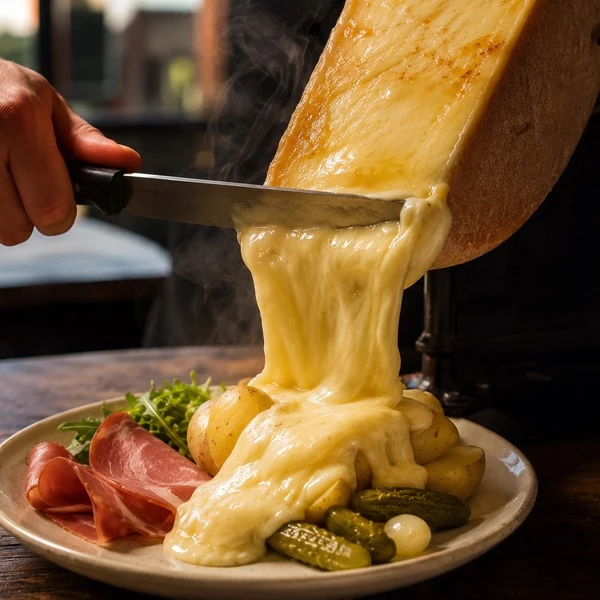
The cheese you melt and scrape. It is the one running down over the potatoes.
TasteNutty and salty with a milky sweetness. It's a washed-rind cheese, brined over and over as it ripens, so melting sends up a strong aroma — yet the taste itself stays mild.
Intensity
TextureSpringy and chewy cold; under heat it does not string but flows thickly. It's fatty, and the calcium-to-salt balance is tuned for melting, so it starts running at around 40°C.
Similar cheeses
How it differsThis cheese exists to be melted. Gruyère melts well too, but Gruyère is a hard cheese you would happily eat cold; raclette is semi-hard, flows more softly under heat and smells meatier. Fondue means melting cheese in a pot and dipping into it; raclette means melting a cut face and scraping it off — different rituals entirely.
Pairing
🍷 WineDry white (Chasselas)
🥂 DrinkHot tea
🍽️ FoodBoiled potatoes, pickles, pickled onions, ham
How to enjoy
Hold the cut face to the heat and scrape the melted part over potatoes. No special grill needed — a pan or the oven works. Trim the rind before melting, and skip the ice water: the Swiss drink hot tea or white wine with it so the fat doesn't set.
What to look for
Pre-sliced is the easiest way in — a frying pan or the oven will do without a dedicated grill. Raclette du Valais AOP from Switzerland is made with raw milk, while Raclette de Savoie IGP from France must be aged at least eight weeks, and they taste subtly different. It is a pungent cheese, so start at the milder end.
Storage
Wrap in plastic and refrigerate. The smell travels, so keep it in its own sealed box. A little drying doesn't matter for something you'll melt, but a tacky rind and a sour smell mean it's gone.
⏳ AgingSavoie IGP: 8 weeks minimum
Good to know
The name comes from the French racler, to scrape. Alpine herders melted the cut face against a campfire and scraped it onto bread, and the habit became the dish. Plenty of countries make it now, but only raw-milk cheese made in the Swiss canton of Valais and ripened three months may be called 'Raclette du Valais' (AOP). The pickles are not a garnish — they cut the richness, which is why they are never left out.