
Comté
Beginner–Intermediate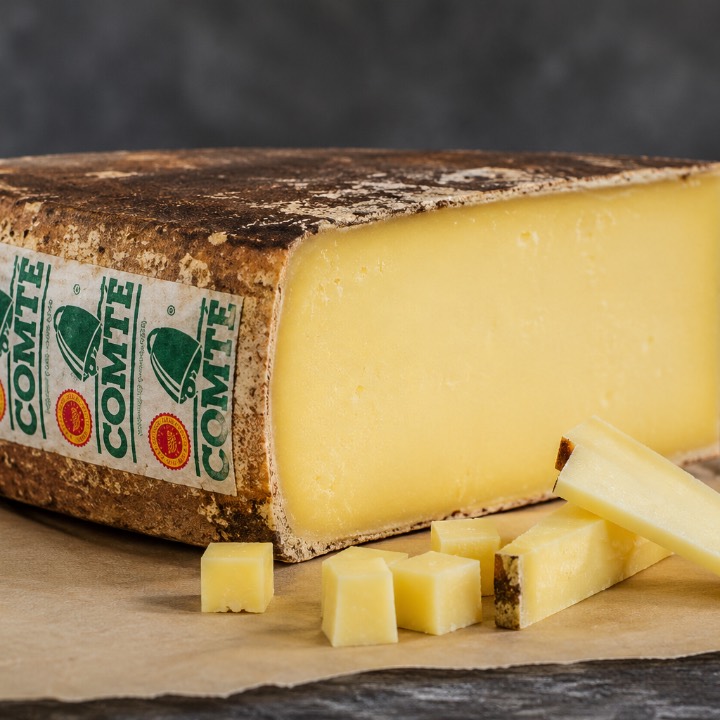
France's most-eaten cheese. Ageing brings out nuts and caramel.
TasteToasted nuts first, then a caramel sweetness behind it. Long-aged wheels crunch with crystals and turn distinctly salty. Season and pasture show through: milk from summer grass gives a yellower, brighter-smelling cheese. Those crunchy crystals are tyrosine, a sign it has aged well rather than gone off.
Intensity
TextureFirm without being stiff; it melts to butter in the mouth, and spreads smoothly under heat.
Similar cheeses
How it differsGruyère is the closest comparison — both are cooked and pressed hard cheeses, but Comté comes from the French Jura and reads a touch fruitier and nuttier. Emmental differs on holes: Comté has almost none, and well-aged wheels give up white crystals as you chew.
Pairing
🍷 WineJura white (Savagnin)
🥂 DrinkCider
🍽️ FoodWalnuts, baguette, apricot jam, boiled potatoes
How to enjoy
Best sliced thin and eaten as is. It melts well, so it also goes into fondue, gratins, and quiche. Straight from the fridge the aroma is shut; give it half an hour out.
What to look for
The bands are widely misread. A green band (Comté Extra) versus a brown one reflects a grading score out of 20 — it says nothing about age or flavour direction. Both are genuine Comté matured at least four months, and they rarely taste far apart. If you want an older wheel, look for the months stated, not the colour of the band.
Storage
Wrap in paper, then loosely in plastic, and keep it in the crisper drawer. The rind is not eaten. If the cut face dries, shave that layer off and carry on.
⏳ Aging4 months – 3+ years (4 minimum, around 8 on average)
Good to know
It's made from raw Montbéliarde milk in the Jura, at village cooperatives called 'fruitières' — a single wheel takes milk from several farms, which is why they have pooled it for centuries. Finished wheels are judged out of 20: a score of 14 points or above earns the green band. A wheel scoring 12 to 14 still qualifies, on a brown band, but only if its taste score is 6.5/10 or above and it is sold cut.